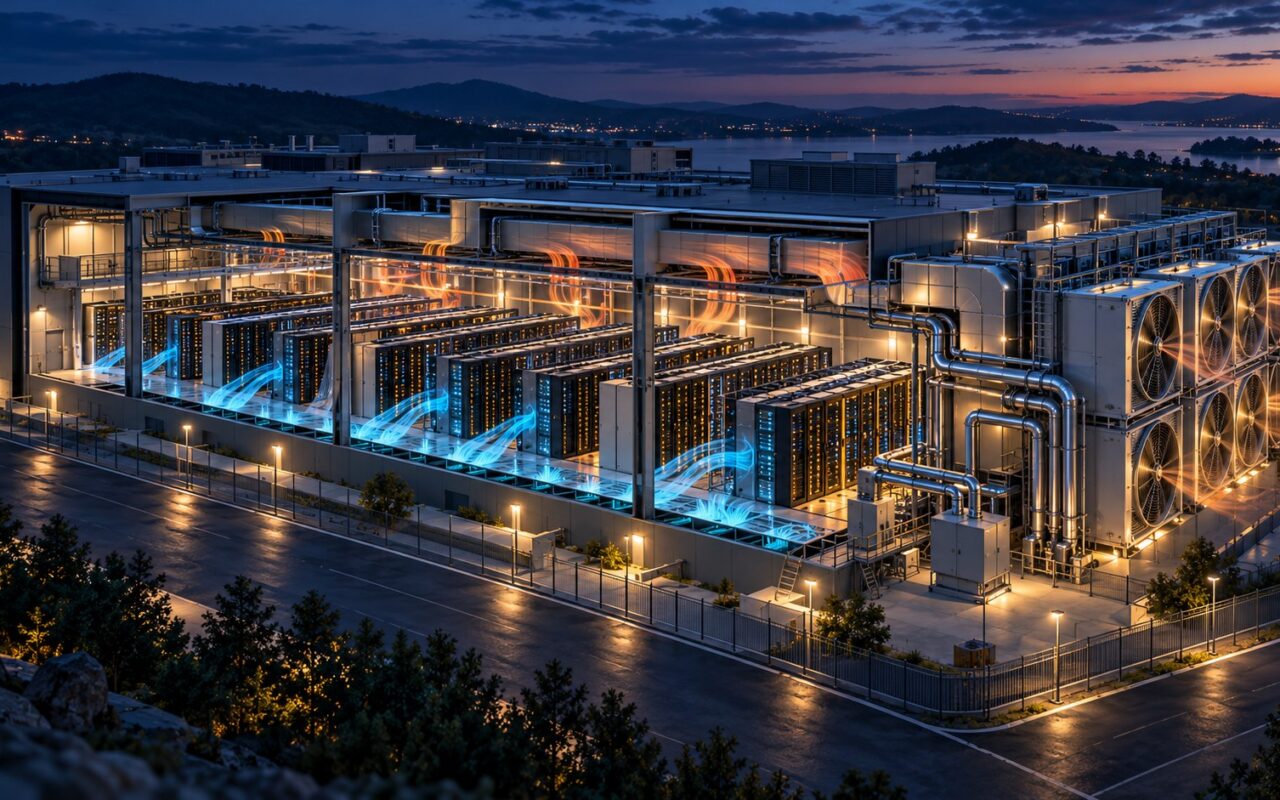
We call it the cloud. That makes it sound soft, quiet and probably somewhere above the mountains.
Then you stand near a data centre and hear a steady roar. So why do data centres make so much noise? The short answer is that keeping all those computers cool takes a lot of moving machinery. But there are a few other things going on too.
Your laptop fan, with a much bigger family
You know that sound your laptop makes when you open a game, start editing a video or ask it to do something slightly ambitious?
Now imagine racks full of computers, working day and night.
The processors use electricity and produce heat. That heat has to leave the equipment, otherwise temperatures climb beyond what the hardware is designed to handle.
In an air cooled server, fans push air through a tightly packed box of components. Multiply that by rows of racks and you can see why a server room is rarely a peaceful place to have a conversation.
Dell’s acoustics guidance explains that the sound depends on the server configuration and operating conditions. More demanding cooling needs can mean faster fans and more noise. Every server does not sound the same.

But the biggest noise next door may be outside
Here is the part that gets missed. Someone living nearby may be hearing the cooling equipment around the building more than the computers inside it.
Depending on the design, a data centre can have chillers, cooling towers, dry coolers, pumps and air handling equipment. Fans move air, pumps move liquid and compressors do their part in refrigeration systems.
That is a lot of machinery supporting what looks, from the road, like a fairly boring warehouse.
And then a generator joins
Many facilities have backup generators to keep essential systems running if the normal electricity supply fails. Engines, exhausts and their cooling systems can add a different, deeper sound.
They also need testing. So a sudden increase in noise could be a test or an outage, rather than the normal cooling hum.
That does not mean every data centre runs diesel generators all day. Some facilities have other power arrangements, including power generation on site. You need to know which equipment is actually operating before blaming the entire soundtrack on one thing.
Why does the hum seem worse at night?
The machines may still have work to do after everyone nearby has gone to bed. Websites, storage and online services do not all close at six.
Meanwhile, traffic and other everyday sounds can fade into the background. A steady mechanical sound that was less obvious earlier can become much easier to notice.
The character of the noise matters too. A distinct whine, rumble or repeated change in pitch can draw attention in a different way from a broad rushing sound. Distance, buildings, terrain and weather also affect what reaches a particular home.
This is why a recording from one site cannot tell you how every data centre sounds. Even a decibel number needs context: where was it measured, when, and what was running?
Surely liquid cooling makes it silent?
It sounds like the obvious fix. Swap the noisy air for liquid and enjoy the peace.
Well, partly. Liquid cooling can reduce how much air some equipment needs, but it does not make the heat disappear. The heat still has to go somewhere.
Pumps and coolant distribution equipment may be involved, and the facility can still need outdoor equipment to release that heat. Trane describes these cooling systems as a connected chain, with the sound changing according to the equipment and how it operates.
So “liquid cooled” does not automatically mean “silent neighbour.” The whole design matters.
Can they turn the volume down?
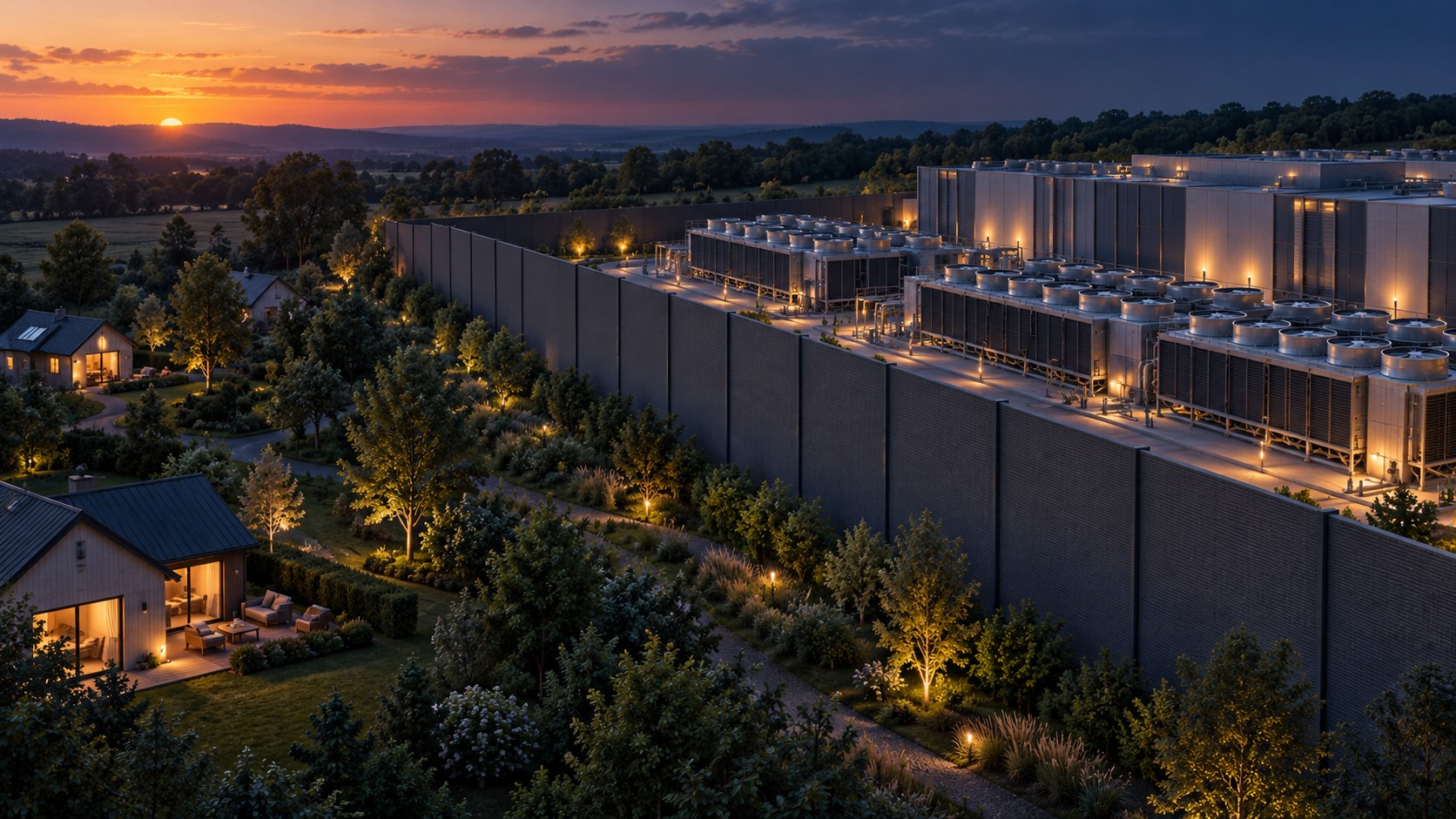
Yes, there are ways to reduce it. Quieter equipment, suitable fan speeds, acoustic enclosures, silencers, vibration isolation and properly designed barriers can all help. Putting noisy equipment farther from homes, or shielding it with the building itself, can help too.
But you cannot simply put a lid over every fan. Cooling equipment still needs airflow. A fix that traps the heat creates another problem.