
Getting an AI to answer a question is one thing. Getting it to stay with a messy problem when the first few ideas fail is a much bigger ask.
That is the interesting part of Gemini 4 Carbon, Google’s latest AI model. The company is putting the focus on difficult coding work and cybersecurity, with access going to selected defenders first.
An AI that stays with the problem
In its announcement, Google says internal teams have seen Carbon work for days on engineering tasks, tracing bugs through large codebases and trying different approaches.
Anyone who has chased a stubborn software bug will understand the appeal. The first fix is not always the right one. Sometimes it only moves the problem somewhere else.
The useful question is whether an AI can keep track of what it has tried, recognise a dead end and come back with a fix that actually holds up. A confident answer on its own does not get that job done.
Finding the hole is only half the job
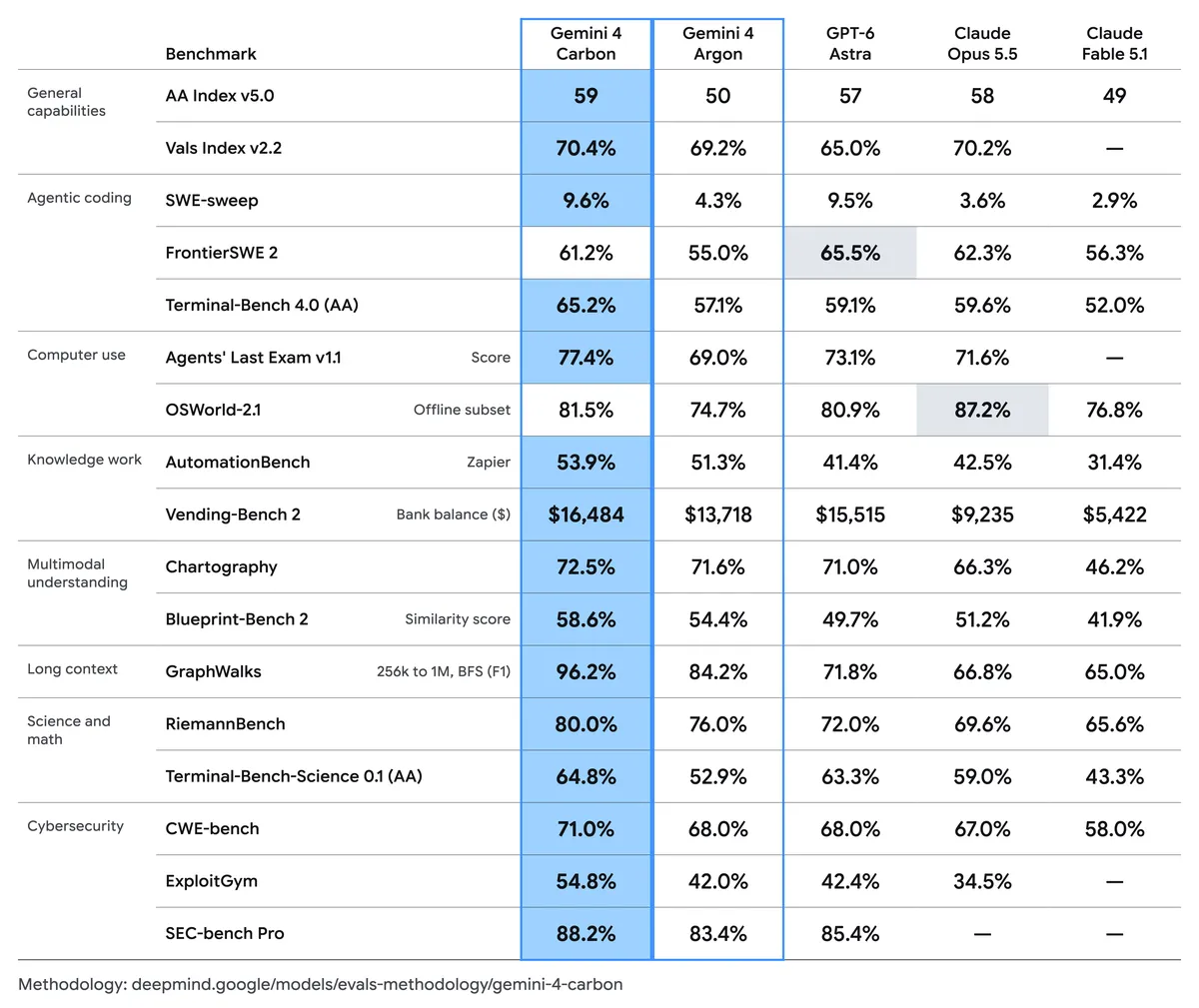
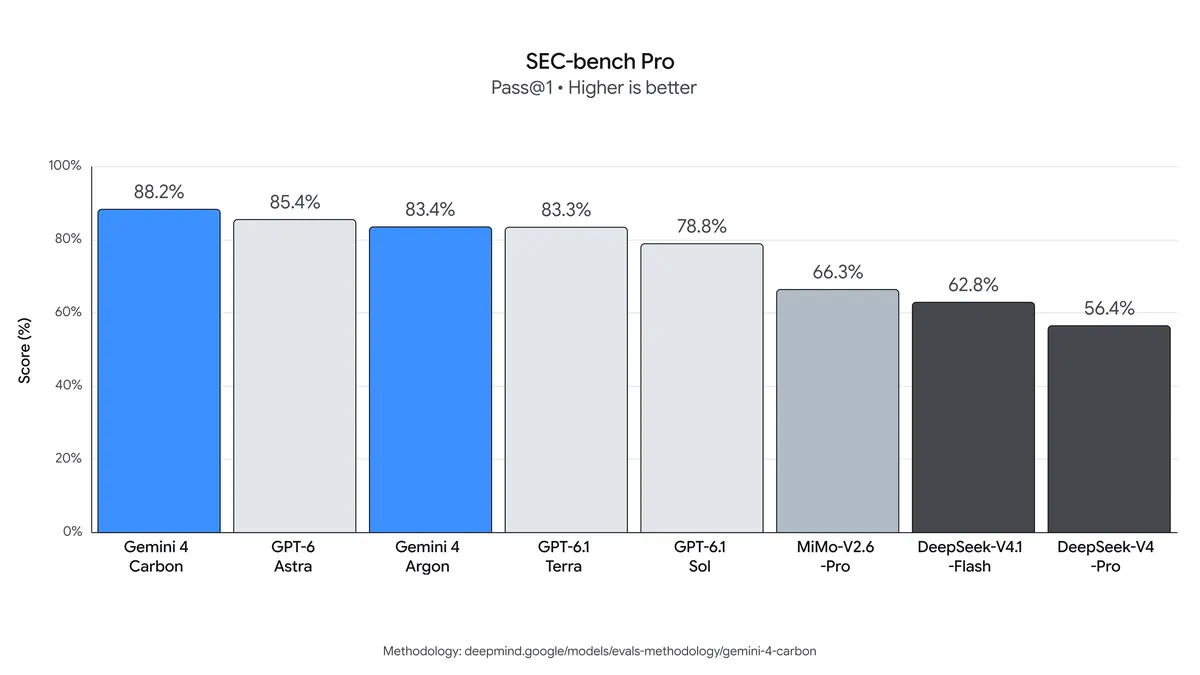
Google reports scores of 88.2% on SEC-bench Pro for finding vulnerabilities, 54.8% on ExploitGym for exploitation and 71.0% on CWE-bench for patching. It says those external benchmark evaluations were run without guardrails.
Those are different tests, not a single score for how safe your computer will become. The practical idea is to find a weakness, check whether it can be used and fix the cause.
That last step matters. An impressive list of problems is less useful if somebody still has to work out how to repair all of them.
And yes, the AI needs checking too
Google also reports fewer unsupported claims than its earlier Argon model in internal testing. These are the company’s findings; we have not independently tested Carbon.
Being able to say “I could not verify that” can be more useful than producing a tidy explanation that happens to be wrong. Especially when software security is involved.
Can you try it yet?
Carbon is initially reaching selected cybersecurity defenders, with more trusted partners to follow through Google’s Fairwind Program. Wider access for developers, businesses and consumers is planned, but the announcement gives no firm public release date.
So there is a little waiting involved. For now, the part worth watching is whether Carbon can turn long stretches of work into reliable results. Finding a bug is clever. Fixing it without quietly creating another one is where things get interesting.