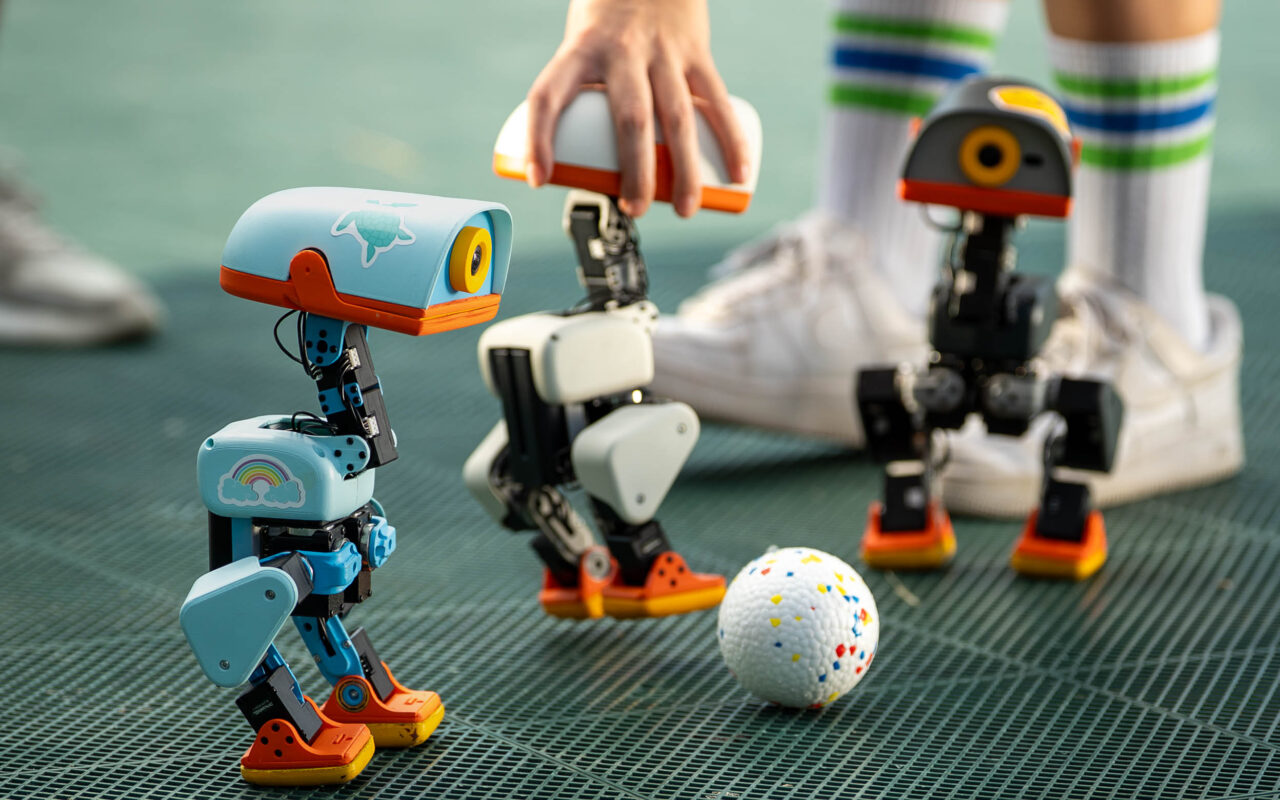
Imagine a small duck walking across your desk while you are trying to finish some work. Now imagine it putting on rollers and going around the room. No, your coffee is not the problem.
Meet Microduck, a 25 cm tall robot from Pollen Robotics, the robotics team at Hugging Face. It looks like something you would buy because it is cute and then spend the evening showing everybody.
But there is a little twist. The cute part is only the beginning.
First, let the duck do its thing
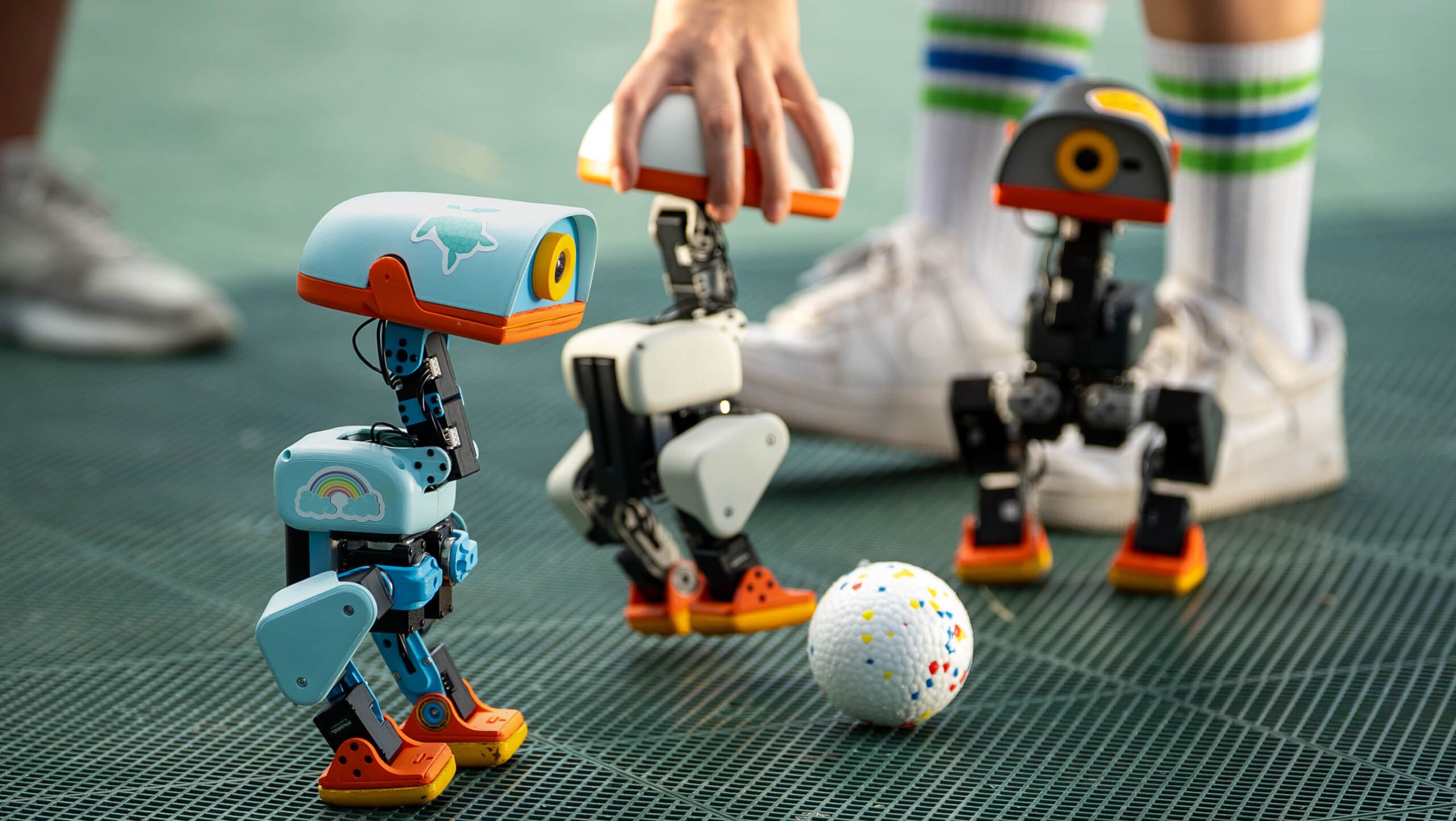
According to Pollen, Microduck can walk, sit, crouch, pick up small objects with its beak and get back on its feet from many common falls. Add the roller attachments and it can skate too. Honestly, the beak doing actual work is a nice touch.
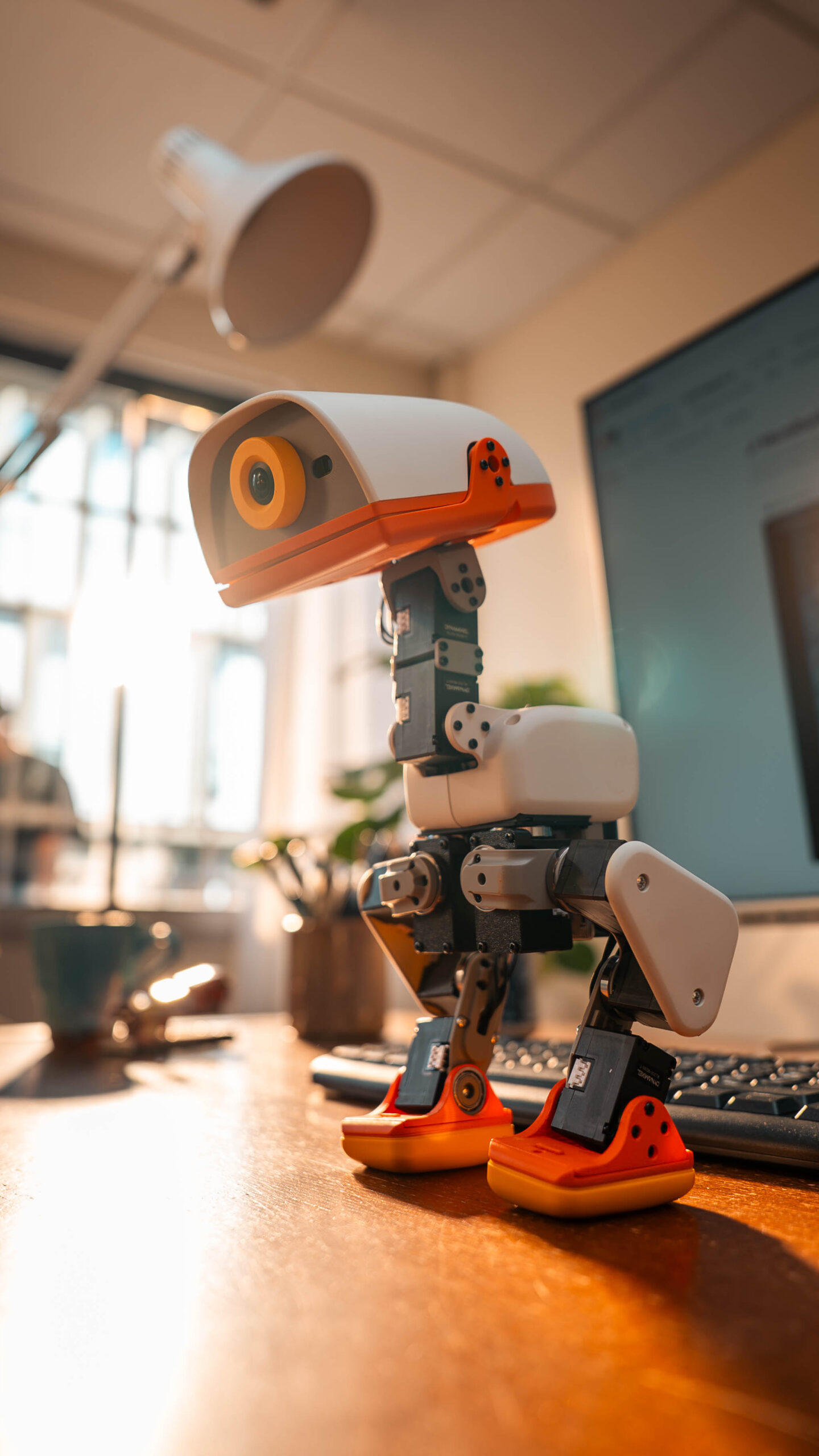
You get a game controller in the box, so you dont have to write code just to start playing. Pollen lists seven trained movements, and the robot comes with a battery and USB-C cable as well.
Watch the official Microduck video below. This explains the appeal much faster than a long list of specifications.
So, is this just an expensive toy?
Fair question. At an introductory $399 before taxes and shipping, this is hardly a small impulse purchase.
Here is where it gets interesting. Microduck’s software lets you train new behaviours in a simulated world, then transfer what you have trained to the real robot. This uses reinforcement learning, where a system learns through repeated attempts and rewards for doing the task well.
In simple words, the virtual duck does the practice. The real duck gets to try the result. If the movement is not right, you adjust the simulation, train again and try again. There goes your quiet weekend.
Pollen provides the control software, simulation and training tools, and owners can share their trained behaviours with the community. There is also a browser simulator if you want to have a look before thinking about the hardware.
There is a catch in the open source bit
The software is open source. Pollen makes clear that the mechanical and electronic design files are not. So this does not mean you can download all the plans and build the exact robot yourself.
Still, for someone curious about robotics, getting access to the training tools is a big part of the attraction. You can start with a controller and explore the code later. Of course, teaching a useful new skill will take more patience than pressing the walk button.
What is actually inside this little fellow?
Microduck has 15 motors, a front camera, compact LiDAR for measuring distance and two motion sensors called IMUs. Pollen lists its weight at under 800 grams. Its removable battery is rated for around an hour of use, depending on what the robot is doing.
It comes in Cream, Graphite, Lavender and Sky. Choosing the colour may be the easy part; deciding whether you want another project on your desk is the real question.
Before you get your wallet out
Pollen is taking advance orders, with first deliveries targeted before Christmas 2026. That is a target, not a guaranteed delivery date. North America and Europe are the launch markets; readers elsewhere should check availability directly.
The roller attachments are listed in the separate $39 Accessory Pack. Some specifications, including camera details and the age recommendation, are still being finalised. We have not tested Microduck ourselves, so this is a look at what Pollen has announced.
For us, the interesting part is how it sneaks a serious learning project into something that looks fun. You come for the skating duck, and suddenly you are wondering how to teach it a better walk.
Would you actually train one, or just let it roll around the house? Be honest 🙂